How to Get Better at IELTS Writing by Overcoming Common Mistakes
To put it as simply as possible, writing is just harder than other parts of language.
Read the guide : How to Get Better at IELTS Writing by Overcoming Common MistakesTo put it as simply as possible, writing is just harder than other parts of language.
Read the guide : How to Get Better at IELTS Writing by Overcoming Common MistakesIf you are interested in improving your writing by increasing the level of formality, then continue reading and find out why you should avoid personal pronouns and how to do effectively.
Read the guide : Avoiding Personal Pronouns [IELTS Writing]One of the reasons why IELTS writing is so much more difficult than the others parts of the exam is that it includes punctuation.
Read the guide : IELTS Mistakes: The Comma SpliceAs you can see, only the last sentence is correct.
Read the guide : How to Learn PrepositionsExplore “IELTS Correction Megathread [2019]” in this IELTS study guide.
Read the guide : IELTS Correction Megathread [2019]If you were to look at all the most popular IELTS websites and Facebook pages, you’d be forgiven for thinking that the best way to get a high band score in IELTS is to learn lots of idioms.
Read the guide : Do I Need to Use Idioms for IELTS?Small changes in grammatical construction can have a big impact on the meaning of a sentence.
Read the guide : The Importance of Grammar for IELTSExplore “Omitting Relative Pronouns” in this video lesson and accompanying guide.
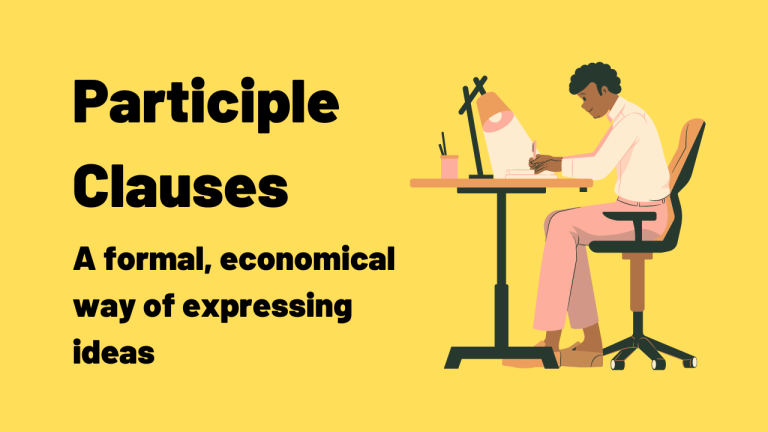
Read the guide : Omitting Relative PronounsA participle clause is a group of words containing a present, past, or perfect participle, whose subject can be found in another clause.
Read the guide : Participle ClausesStudents often ask me about the passive voice and whether or not they should use it in their IELTS exam.
Read the guide : Should you use the Passive Voice for IELTS?On the other hand, dependent clauses do not contain a complete thought.
Read the guide : Essential IELTS Grammar: Sentence TypesExplore “A Simple Guide to Noun Clauses” in this IELTS study guide.
Read the guide : A Simple Guide to Noun ClausesThe future simple is used for most events or actions taking place in the future.
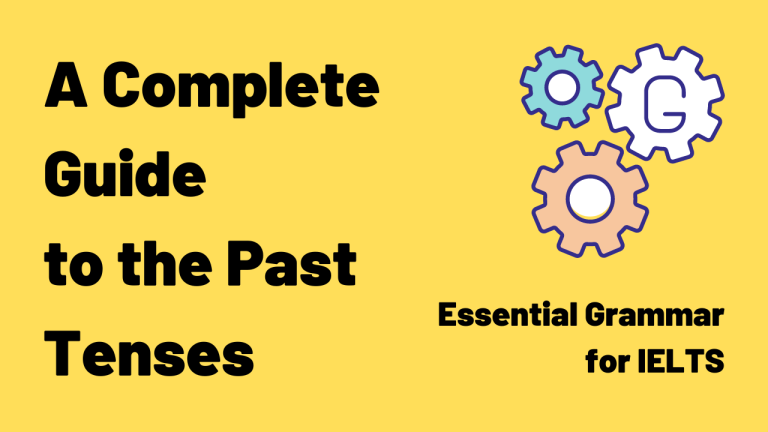
Read the guide : A Complete Guide to the Future Tenses (for IELTS)As with the present, there are four aspects to the past tense in English, and each can be divided into positive, negative, and question forms.
Read the guide : A Complete Guide to the Past TensesTake a piece of paper and draw two lines through the middle – one from top to bottom and the other from left to right.
Read the guide : A Complete Guide to the Present TensesExplore “The 8 Parts of Speech You Need to Know for IELTS [Grammar Lesson]” in this video lesson and accompanying guide.
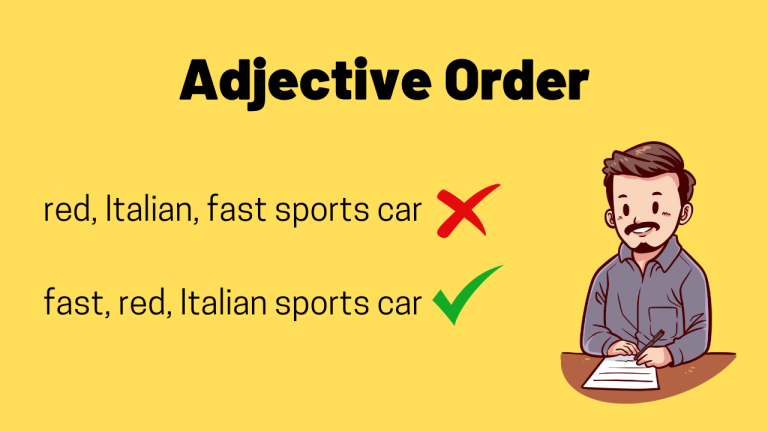
Read the guide : The 8 Parts of Speech You Need to Know for IELTS [Grammar Lesson]In order to succeed in the IELTS exam, you need to use language accurately and also naturally.
Read the guide : Adjective Order for Better DescriptionsOnce you know the different types of sentences, you should practice using them.
Read the guide : 4 Easy Ways to Improve Your IELTS Writing