Should Have (Should’ve) + Past Participle
As you can see, the latter is an abbreviation (meaning a shortened version).
Read the guide : Should Have (Should’ve) + Past ParticipleAs you can see, the latter is an abbreviation (meaning a shortened version).
Read the guide : Should Have (Should’ve) + Past ParticipleIf you want a full explanation of the present perfect tense, then read this article.
Read the guide : Present Perfect vs Past PerfectYou might have heard conditionals referred to as “if-clauses.” That’s because one of the two clauses in a conditional sentence will start with the word “if.” For example:
Read the guide : A Simple Guide to Conditionals [English Grammar]To put it simply, a sentence fragment is a group of words that is used as a sentence, but which is not actually a proper sentence.
Read the guide : Sentence Fragments: A Big Grammar ProblemIf you want to do well in IELTS, you need to have a good grasp of grammar, and one of the most important things you should know is how to use verb tenses correctly.
Read the guide : Most Common Verb Tenses for IELTSWhen it comes to IELTS writing, it is essential to have a good grasp of grammar.
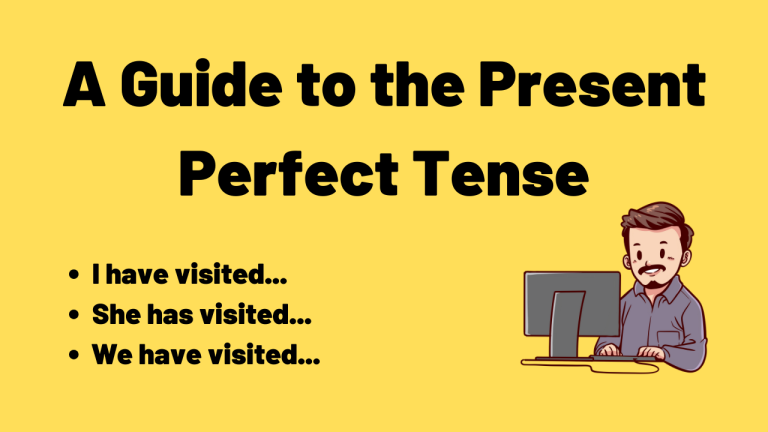
Read the guide : Subject-Verb AgreementThe present perfect tense is made by using “have” or “has” and then the past participle form of the main verb.
Read the guide : A Guide to the Present Perfect TenseFor those of you who prefer listening, this lesson is available in video form:
Read the guide : Is Capitalisation Important in IELTS?Also, remember that when it comes to learning English, you don’t necessarily need to know the names of grammatical structures.
Read the guide : Subordinating Conjunction vs Conjunctive AdverbWhen writing in English, it is essential to know about the different sentence types and how to use these accurately.
Read the guide : Compound Sentence FormulaWhen it comes to IELTS writing, spelling is really important.
Read the guide : How to Improve your Spelling for IELTSStill, it is important that you know the basics of English punctuation.
Read the guide : How to Use a Semi-Colon [A Very Simple Guide]When you add information to a noun, you need to think about whether the noun could have been understood without the extra part.
Read the guide : Which or That? [IELTS Grammar Guide]The first question is what does 'get used to' mean?
Read the guide : Get Used To [IELTS Grammar]In the past few decades, it has become quite common for news reports to focus on major problems rather than positive news.
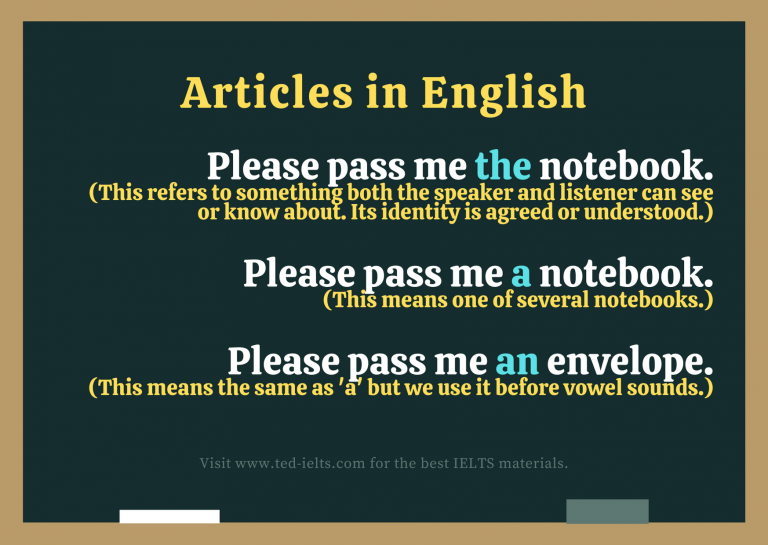
Read the guide : Agree With vs Agree ToWhile it is certainly true that you can make yourself understood without using definite and indefinite articles, once you incorporate them into your English language usage, you will begin to think and express yourself with exactness.
Read the guide : Definite and Indefinite Articles: A Simple GuideWhile many feel men and women have equal capabilities at work, there are few who seem to disagree.
Read the guide : Few vs A Few vs SomeSome people had posted their IELTS essays for others to give feedback, and one of them included a screenshot from a bad website that gives you an estimated band score for your IELTS writing.
Read the guide : How to Use Cohesive Devices Effectively for IELTS Writing